
Collagen for Joint Health: Do Supplements Really Work
In this article:
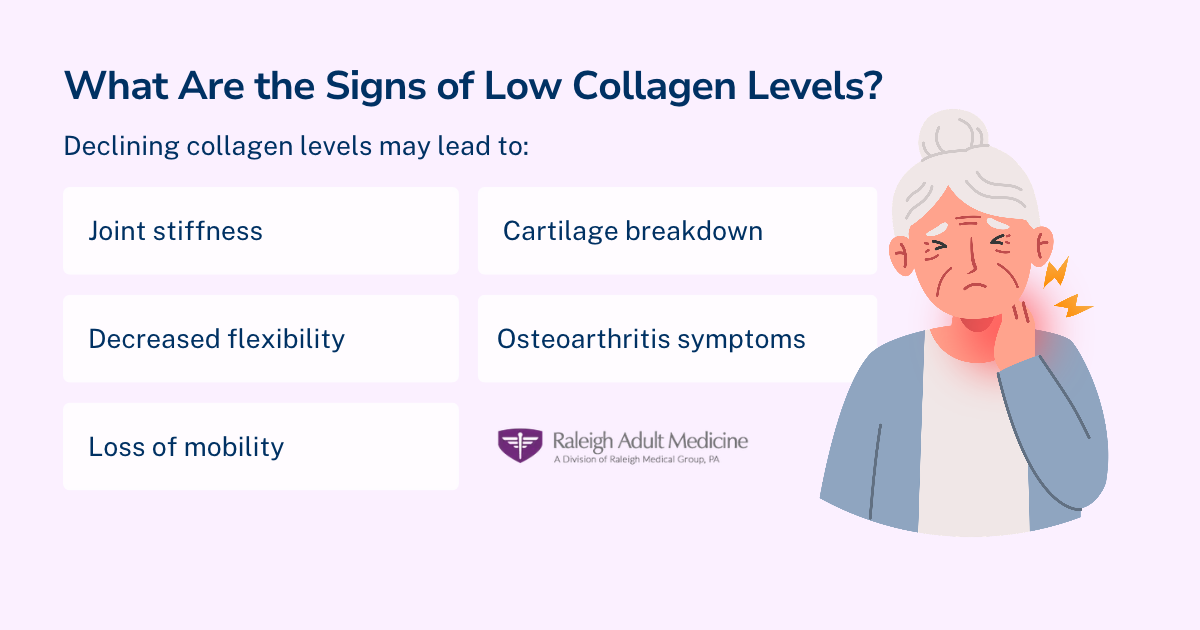
As we get older, aches, joint stiffness and reduced mobility may become more common, affecting our activity and comfort levels. You may have heard about collagen for joint health, leading you to wonder if these popular supplements could be beneficial for protecting your joints and helping you maintain an active lifestyle.
When combined with good overall nutrition, some studies show that collagen supplements may help modestly reduce joint pain and improve mobility related to osteoarthritis or physical activity for some people.
In this article, we’ll take a closer look at what the research says and address other questions you may have about whether to add this supplement to your regular routine.
At Raleigh Adult Medicine, we understand how important it is to have a caring, compassionate partner in your health care. If you’re experiencing joint health issues that are interfering with your daily activities or overall quality of life, we invite you to contact us. We’ll evaluate your situation and determine next steps to help you find relief.
What is Collagen and How Does Age Impact Its Production?
Collagen is the most abundant protein in the body, acting as the primary structural component of connective tissues and providing strength and support to:
-
- Cartilage
- Tendons
- Ligaments
- Muscles
- Skin
- Bones
There are several types of collagen, which your body naturally produces using amino acids in protein-rich foods along with other key nutrients and minerals.
What’s known as Type II collagen is especially important because it is the primary collagen found in cartilage, the protective tissue that cushions joints, reduces friction between bones and supports other body structures.
Collagen production gradually slows as you age, with research suggesting that it may begin declining as early as your mid-20s or early 30s and decrease by about 1% per year after the age of 40.
Can Collagen Supplements Improve Joint Health?
Most of the research on collagen supplements has focused on osteoarthritis (OA), the most common form of arthritis, also known as wear-and-tear arthritis.
While some research suggests that supplements can make modest improvements to joint health and pain from OA, results are mixed and more high-quality, large-scale studies are needed.
The main types of collagen supplements are:
- Hydrolyzed collagen (collagen peptides), which are commonly sold as powders, capsules and drink mixes for easier absorption
- Undenatured Type II collagen (UC II), derived mostly from chicken cartilage and marketed for joint health and support
These collagen supplements may help some people with osteoarthritis experience:
- Less joint pain
- Decreased stiffness
- Enhanced physical function
These benefits may be limited, and results vary from person to person. Collagen supplements are not a “cure” for arthritis.
Something important to keep in mind with supplements is that they are not regulated by the U.S. Food and Drug Administration (FDA) the same way medications are. For example, supplements do not need to be approved by the FDA for safety or effectiveness before being sold to the public.
What Foods Help Support Collagen Production?
Your body relies on important nutrients to help produce collagen naturally. While foods rich in collagen don’t directly increase collagen levels, they provide the necessary ingredients to make it.
Collagen-building nutrients and food sources include:
- Vitamin C, found in oranges, strawberries, bell peppers, broccoli and Brussels sprouts
- Protein-rich foods that contain amino acids, such as chicken, fish, eggs, lean meats, dairy products and legumes
- Minerals like zinc and copper, found in oysters, nuts and seeds, beans, leafy greens and whole grains
A balanced diet rich in these food sources and nutrients can help support your body’s natural collagen-building process and may aid overall joint health.
Can Collagen Supplements Help Prevent Osteoporosis?
Collagen also helps provide structure and strength to your bones. For this reason, researchers have studied the efficacy of collagen supplements for supporting bone health.
In one study involving postmenopausal women with low bone density, daily collagen peptide supplements taken for one year were associated with increased bone mineral density in the spine and hip when compared with a placebo.
While these findings are positive, they don’t prove collagen supplements can prevent osteoporosis on their own or that they should be considered a replacement for osteoporosis treatment.
Bone health depends on several key factors. If you’re concerned about osteoporosis, we recommend you:
- Perform weight-bearing exercise
- Consume adequate calcium and vitamin D
- Practice healthy lifestyle habits
- Seek out medical guidance when appropriate
While collagen supplements may help support bone health, it’s important to use them in combination with the practices above as part of an overall strategy.
What Lifestyle Factors Can Damage Collagen Production?
Though collagen production naturally decreases as you get older, there are several lifestyle habits that can accelerate the process.
Lifestyle factors that contribute to collagen loss include:
- Smoking
- Excessive sun exposure
- Poor sleep habits
- Lack of physical activity
- Heavy alcohol consumption
- A diet high in added sugars and refined carbohydrates
Hormonal changes related to menopause can also contribute to collagen loss.
Fortunately, many of these factors can be managed. Making good choices like exercising regularly, eating a nutrient-rich diet, avoiding smoking and otherwise maintaining a healthy lifestyle can help support collagen production and your overall joint health.
Raleigh Adult Medicine Provides Expert Support for Long-Term Joint Health
Current research suggests that collagen supplements may provide modest improvements in joint pain and function for some people, particularly those with osteoarthritis, though results vary by person.
However, supplements are not a replacement for healthy lifestyle habits and professional medical guidance for supporting your long-term joint health. They are merely one component of a larger strategy for preserving joint function and mobility.
If you’re experiencing joint health issues that interfere with your daily activities or affect your overall quality of life, we encourage you to reach out to us. We’ll evaluate your situation and determine next steps to help you find relief.
Key Takeaways
- Collagen is a key structural protein that supports cartilage, tendons, ligaments, bones and other connective tissues, but natural collagen production gradually declines with age.
- Eating foods rich in vitamin C, protein, zinc and copper can help provide the nutrients your body needs to produce collagen naturally.
- Some studies suggest that collagen supplements may modestly reduce joint pain, stiffness and mobility limitations in people with osteoarthritis, though results vary and more research is needed.
- Collagen supplements are not a cure for arthritis and should not replace medical treatment or other evidence-based approaches to joint health.
- While collagen supplements may support bone health, they have not been proven to prevent osteoporosis and should be used alongside healthy lifestyle habits and appropriate medical care.
- Smoking, excessive sun exposure, poor sleep, inactivity, heavy alcohol use and a diet high in added sugars can contribute to collagen loss over time.
- Maintaining a healthy lifestyle that includes regular exercise, balanced nutrition and avoiding tobacco can help support collagen production and long-term joint health.
- Current evidence suggests collagen supplements may be one helpful part of a broader strategy for preserving joint function, mobility and overall musculoskeletal health.
The content within this article and others on this website is only for educational purposes and should not be considered as medical advice. For any questions or concerns, please consult with your healthcare provider.
=====
Sources:
The Arthritis Foundation, “Can Collagen Supplements Help Arthritis?,”
Cleveland Clinic, “Collagen,”
https://my.clevelandclinic.org/health/articles/23089-collagen